Every Graphic Designer Should Take Notes From Zohran Mamdani’s Masterclass In Political Branding
Visual communication has always been a decisive factor in public life. Brands, entertainment, sport, even social movements — the ones that endure are the ones that look like something.
Politics is no exception. Barack Obama’s “HOPE” poster showed the world how a single image can give a campaign an emotional temperature. Alexandria Ocasio-Cortez’s debut materials showed how a bold, illustrative style could signal “new energy” without saying it outright.
Good political design doesn’t just support the message — it becomes the message.
Breaking the template
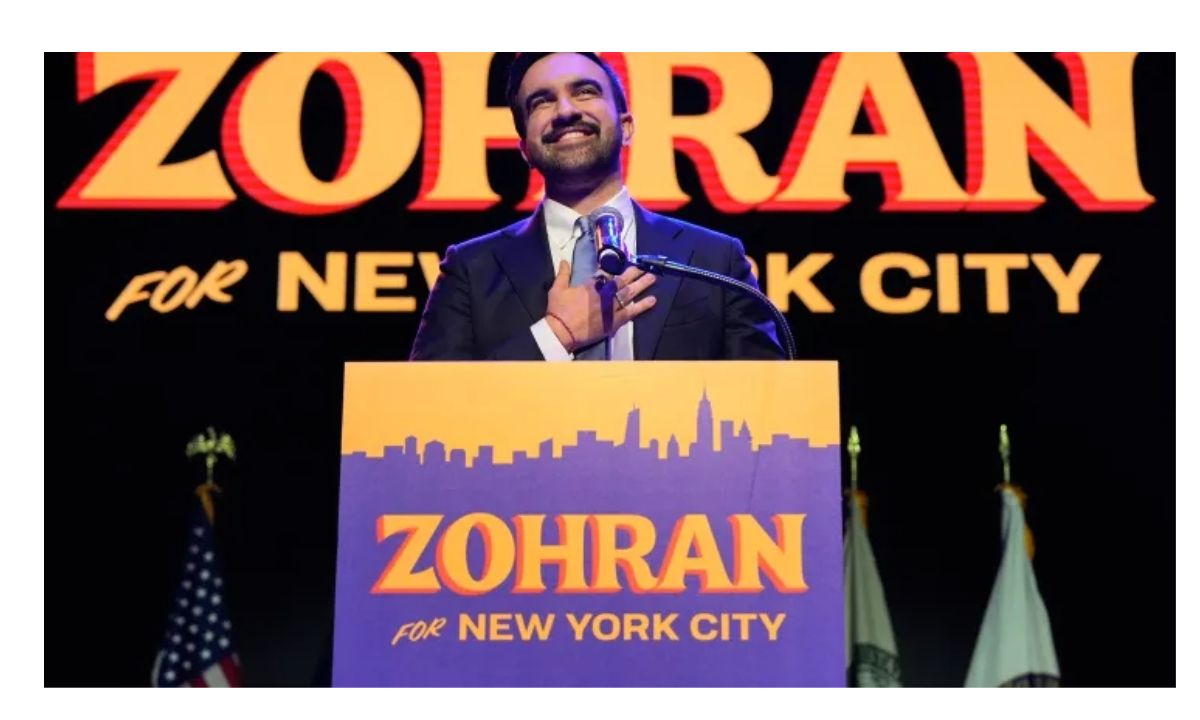
Into that lineage comes New York City’s Zohran Mamdani. His campaign didn’t lean on the usual navy, stars, and institutional serifs. It arrived with colour, with personality, with a New-York-street sensibility.
And that matters, because when every candidate is promising affordability, safety, progress — the one whose materials look distinctive is the one people remember. This isn’t about the politics; it’s about the presentation.
Why it worked
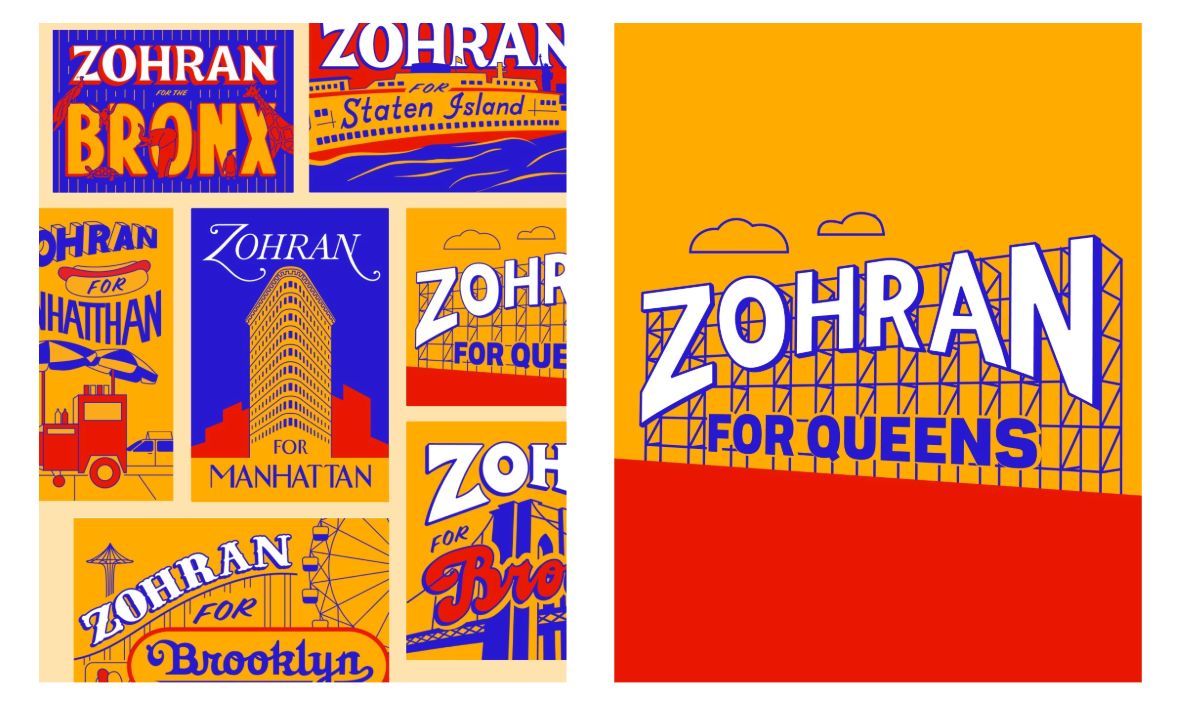
What made this campaign’s look so effective was the way it broke from “city hall neutral” and went straight for “Queens storefront”. Saturated blue fields, loud golden/orange lettering, a warm red shadow, and typography that felt closer to painted signage than to a consultant’s template — the whole system broadcast: this is for the people who actually live here.
It was vernacular, not corporate. That choice instantly set the campaign apart in a crowded visual environment and gave supporters something they were proud to hold up. Credit to Forge, the agency behind it, for building a political identity that felt like a neighbourhood poster, not a national party kit — that’s why it read as honest, visible, and local.
▾ Inside the Design
1. Colour strategy
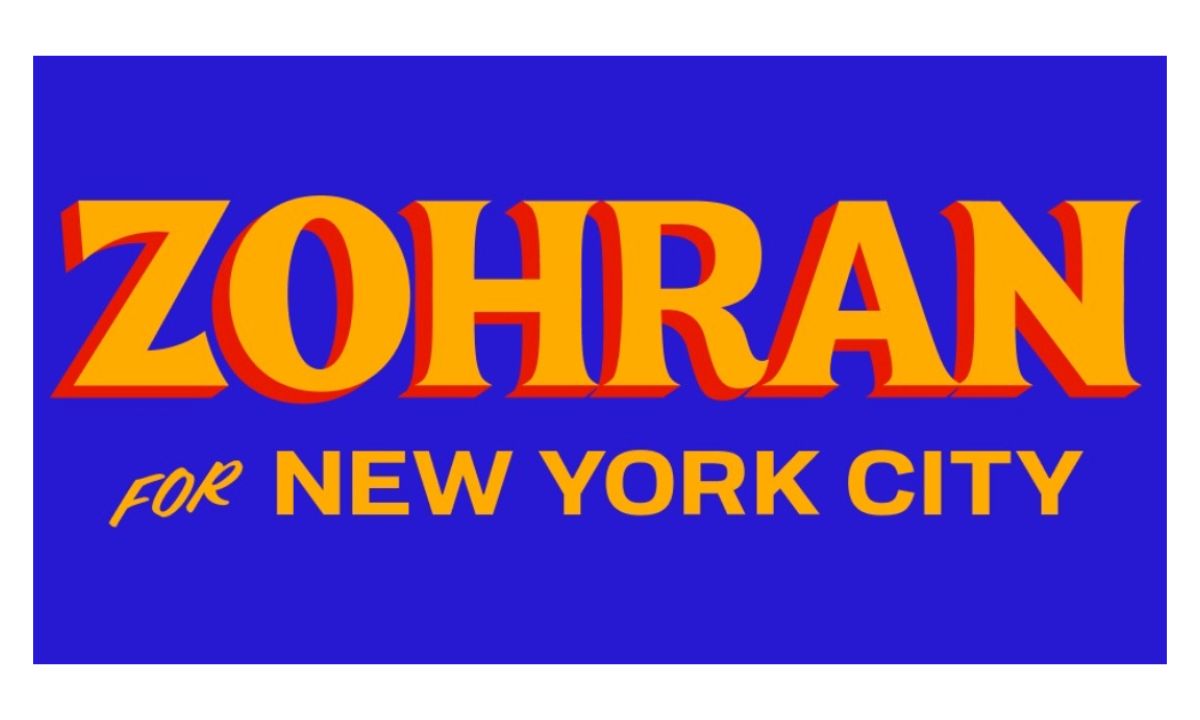
Primary combo: Electric/royal blue + punchy yellow/orange, with red accents.
Why it works: High contrast → high legibility on streets, rallies, and social feeds. The palette also nods to New York’s visual DNA — MetroCards, taxis, bodegas — so it feels native, not imported.
Political advantage: Most campaigns live in the same 3–4 shades of navy. This one claimed a different blue and paired it with warmth and energy — instant recall.
The vibrant tri-colour palette from Forge’s identity system.
2. Lettering and tone
The word “ZOHRAN” is treated like a hero wordmark — wide, confident, and shadowed.
The style references hand-painted signwriting, the language of small business and street-level commerce. That typographic vocabulary says we’re from here faster than any tagline could.
The handcrafted, shadowed typography evokes local signage culture.
3. Composition and hierarchy
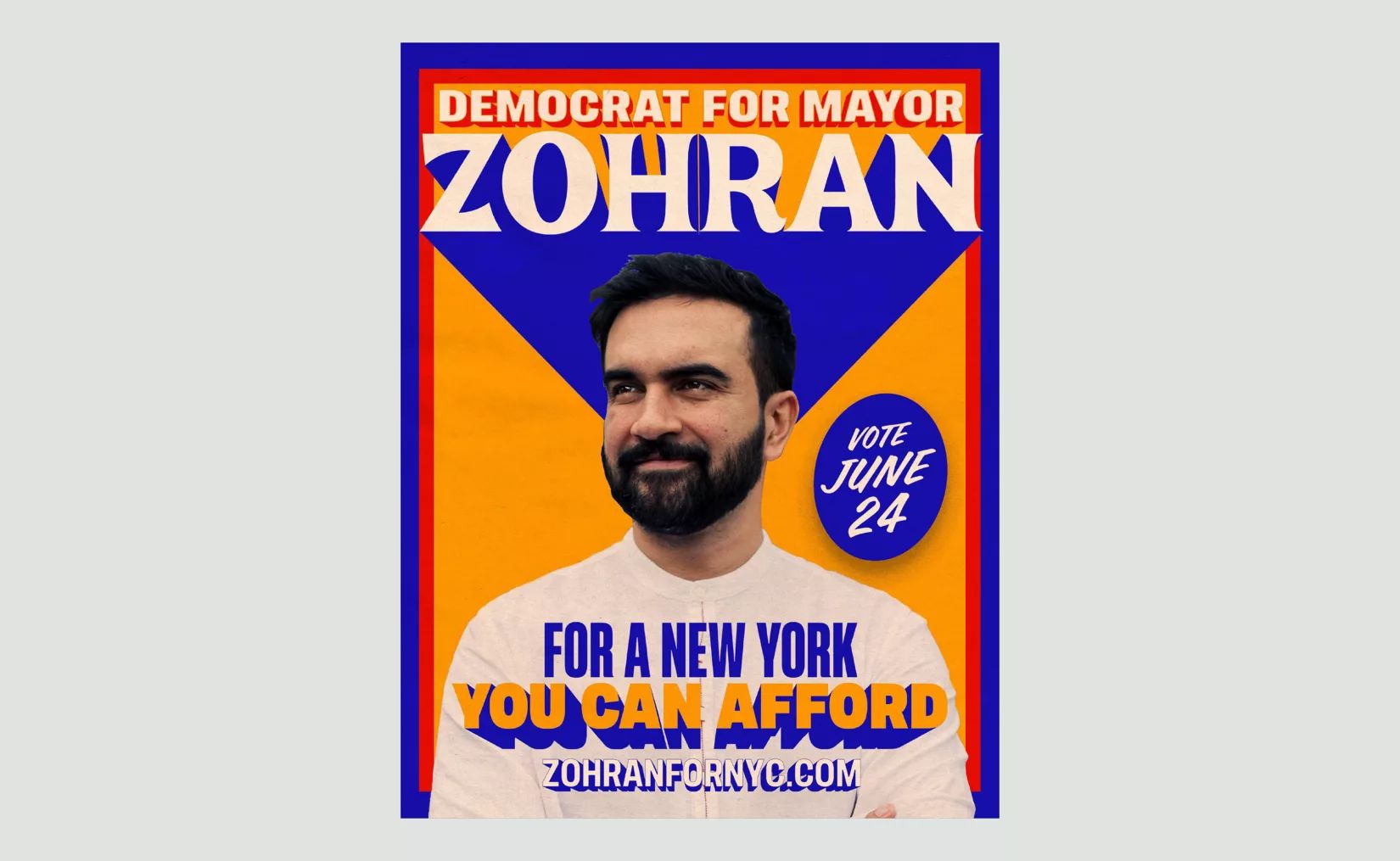
Posters put the name first, issue second — a smart move that establishes colour and type ownership before attaching the message. Circular callouts (“Vote June 24”) and diagonal compositions add motion; photography is calm and approachable, allowing the loud system to do the talking.
The core poster layout with dynamic diagonals and high-contrast typography.
4. System — not just a poster
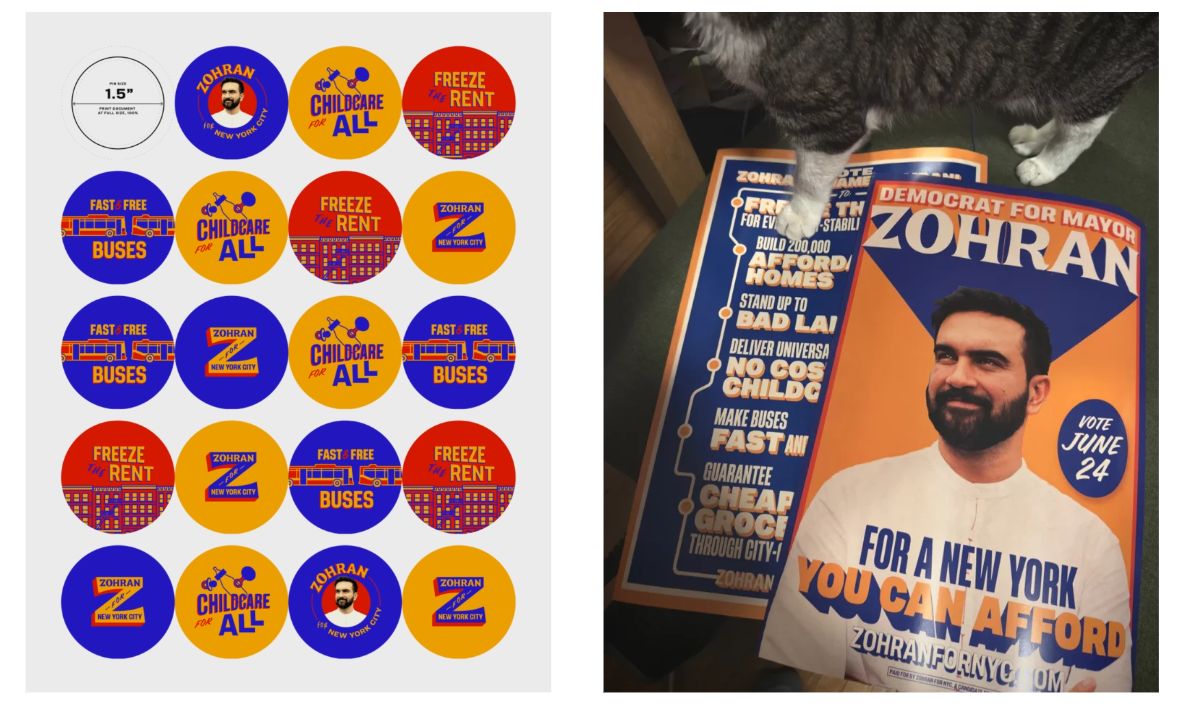
Yard signs, stickers, multilingual layouts, merch — all executed with the same tri-colour energy and chunky type. Because the design is simple and flat, volunteers could reproduce it easily — turning supporters into ambassadors.
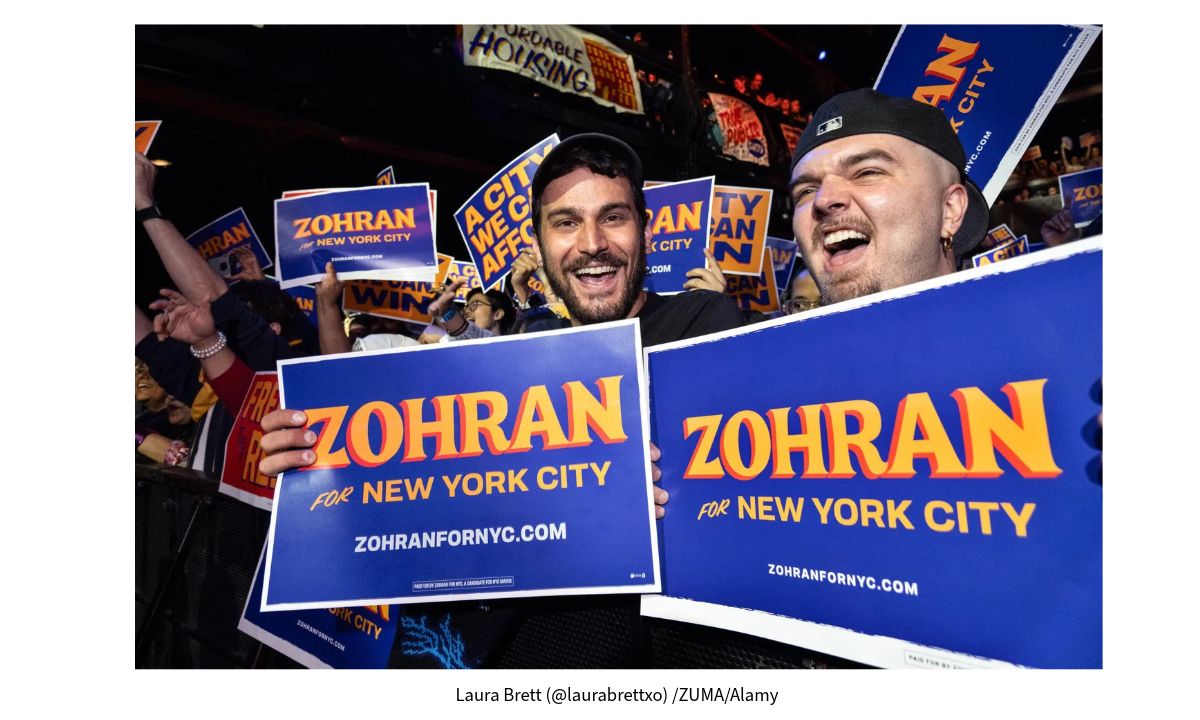
Consistent visual language across stickers, print, and posters.Each borough received its own variation, building local pride into the brand.Rally visuals show the identity’s clarity and memorability in motion.
Large-scale campaign visuals in New York often extend beyond posters into media backdrops and branded environments, where professionally produced step and repeat NYC installations help create consistent, photo-ready moments for press coverage and public engagement.
5. Cultural positioning
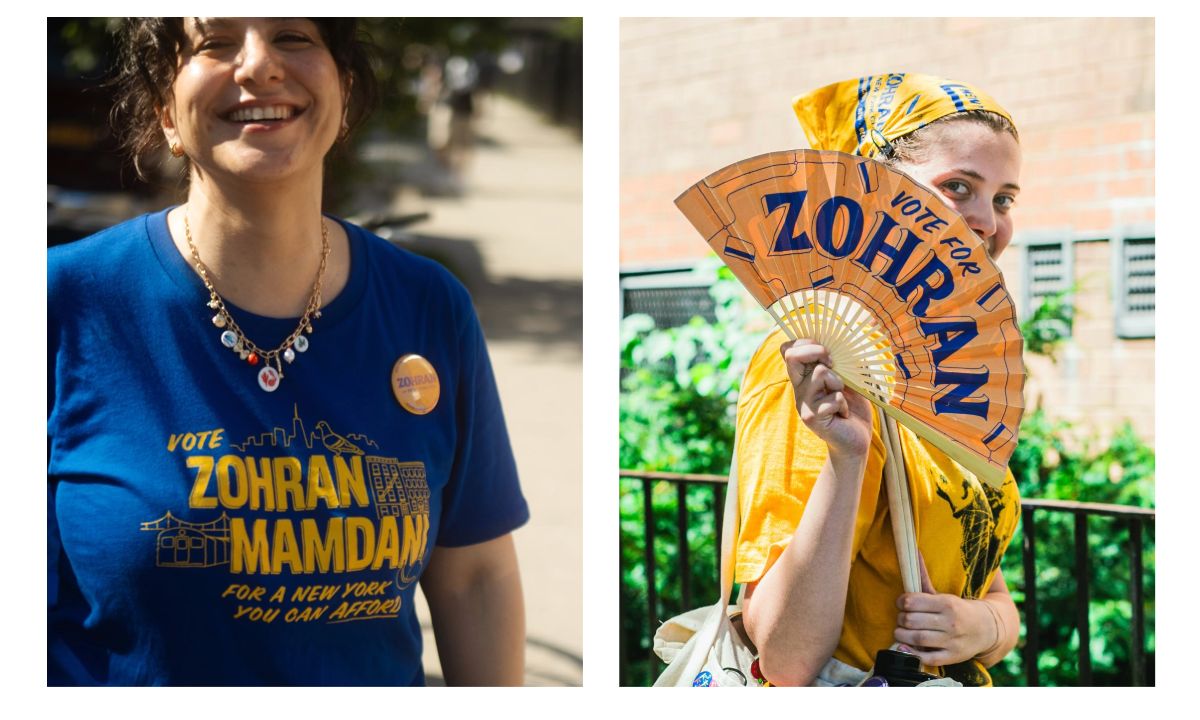
Most political branding aspires upward — governmental, patriotic, almost corporate. This one looked sideways — to community, transport, groceries, rent. The design spoke in the vocabulary of everyday life.
Digital and multilingual applications — the identity expressed inclusivity across platforms.Community supporters wearing campaign colours — design turned into belonging.
6. Real-world resonance
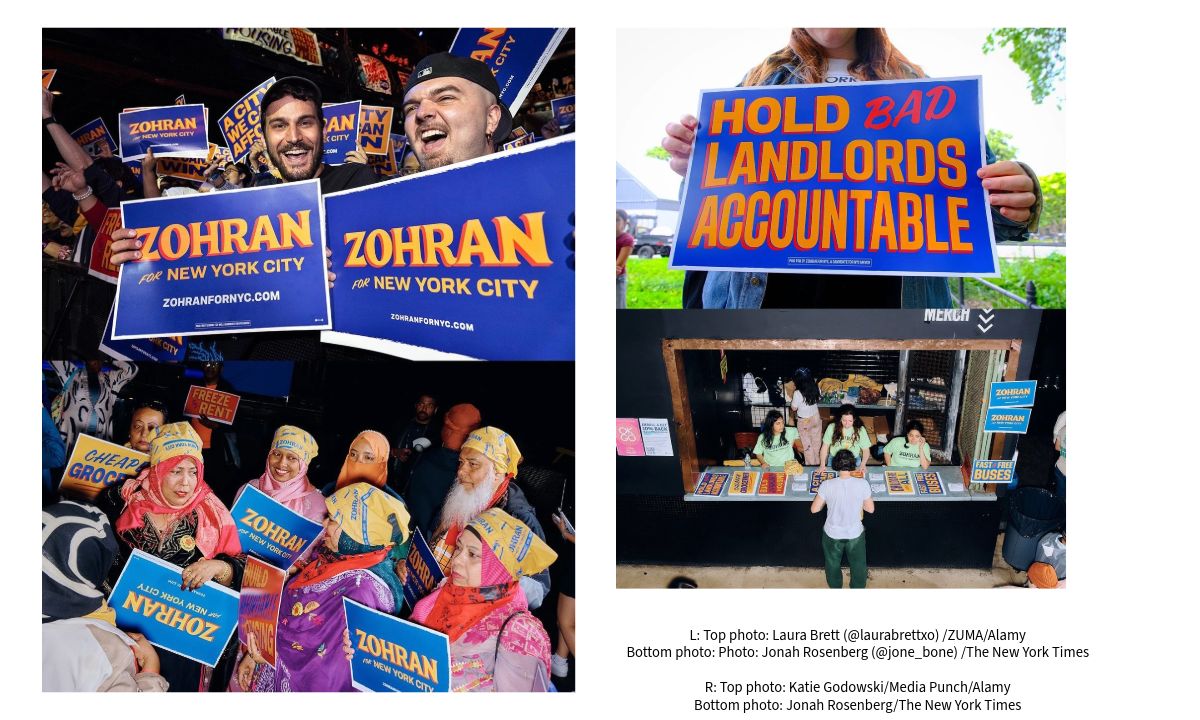
From posters to protests to ballots, the identity travelled effortlessly across mediums. It became part of the city’s texture — not just seen, but used.
Campaign visuals incorporated protest-style placards and grassroots energy.Street-level signage and voting materials extended the same graphic DNA.
Final thoughts
This campaign is a reminder that branding in politics doesn’t have to be bland to be credible. When the visuals reflect the city’s own vocabulary — its colours, its shopfronts, its people — the candidate feels closer, even before they speak.
That’s good design doing strategic work.
What do you think — should more political campaigns go local/vernacular like this, or is there still value in the classic institutional look?