How Computer Vision Is Making Retail Shopping Easier And More Efficient
One of the most promising and swiftly rising technologies these days is computer vision. Retailers and shoppers alike can benefit from the immense variety of applications of computer vision. With a computer vision system analysis and understanding of images and videos, it will help to give insights, automate processes and give the experience of immersive shopping, which was never even thought of a few years ago.
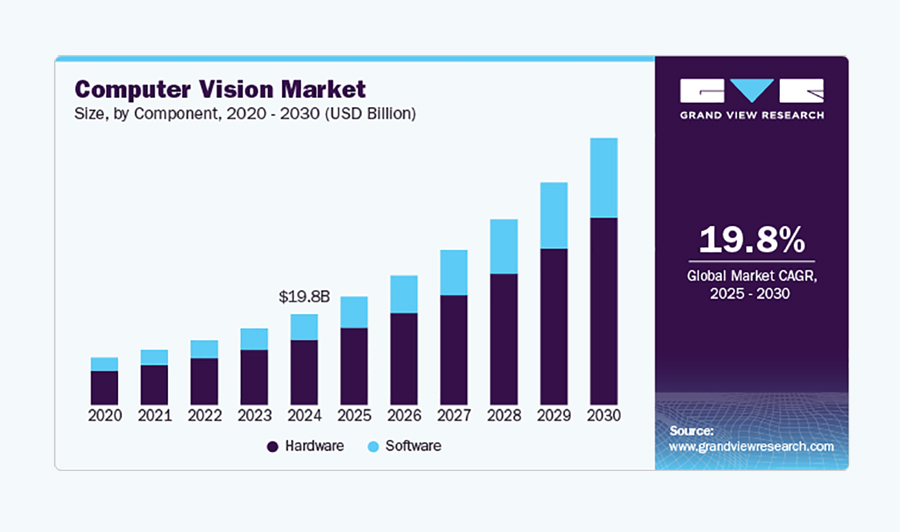
Computer vision offers new and innovative retail solutions to help retailers save costs, make shopping more convenient, and keep customers enthused. The global computer vision market already exceeds $20 billion and is projected to grow at an astonishing CAGR of over 19.8% from 2025 to 2030.
This article explores the current and near-future applications of computer vision that showcase how this groundbreaking technology is redefining retail for the digital age.
Simplifying Checkout with Computer Vision
Long checkout lines are the bane of every shopper. To help customers skip the wait, retailers are rolling out computer vision systems, with the help of computer vision development services, to enable quick, seamless transactions.
Computer vision enabled Amazon Go to pioneer the concept of a cashier-less store in 2018, using those cameras to detect what products shoppers pick up. Instead of having lines and checking out, adding items to a virtual cart, customers can simply do without and walk out. In fact, Amazon has launched 19 Go stores across major US metropolis cities, and more than 85% of customers claim that the experience is 10 times easier compared to traditional checkout.
Similar grab-and-go technology is also coming to full-sized supermarkets and big box stores. Retail giants like Walmart, 7-Eleven, and Carrefour are piloting their own smart checkout systems using overhead cameras to monitor purchases in real time. Though still in early testing stages, cashier-less checkout has the potential to save the average shopper over 24 hours per year that are currently wasted waiting in line.
Computer vision is making paying for purchases easier as well. Mobile scan-and-go apps let customers use their phones to self-scan items as they shop, then pay directly within the app.
Enhancing In-store Operations
Computer vision streamlines vital in-store operations, ranging from inventory management to shelf monitoring analytics. These behind-the-scenes applications run autonomously to lower overhead costs and keep physical stores running efficiently.
For inventory management, computer vision AI can track stock levels across the retail floor in real-time. As items are picked up or put back by shoppers, smart cameras with proprietary retail analytics software detect changes in inventory density. Store workers receive mobile alerts to restock popular products so they never go out of stock. Companies like Trax and RetailNext provide retailers with sophisticated computer vision platforms that can identify product gaps with over 95% accuracy. These solutions integrate with existing store cameras to minimize implementation costs while dramatically improving inventory visibility.
Once inventory hits the retail floor, computer vision gives retailers insight into product placement and promotion effectiveness. Shelf sensors capture images to detect shelf space allocation, product orientation, and pricing accuracy and determine which displays shoppers engage with most. This granular data helps store managers arrange products logically, ensure pricing consistency, and double sales of strategically merchandised items.
Securing Stores and Preventing Theft
Retail shrinkage (inventory loss) due to shoplifting, employee theft and administrative error exceeds $112 billion annually. Computer vision gives loss prevention teams an artificial intelligence boost to deter theft and quickly catch shoplifters.
Intelligent video analytics can automatically flag suspicious activity in real-time. Based on customizable rules, smart cameras analyze live footage to identify known threats like repeat offenders, detect shoplifting attempts, and alert security personnel to intervene. Coupled with facial recognition, computer vision can also help retailers build databases of problem customers to keep track of past offenders.
At checkout, computer vision offers additional loss prevention support. When integrated with POS systems, product recognition algorithms can accurately verify purchases and detect fraudulent substitutions or skipped item scans. After using their computer vision technologies, Grabango – a provider of checkout-free technology – recorded a nearly 60% decrease in partial shrink – losses from theft and scanning errors. This was derived from a 37,500 transaction study spanning partner stores.
Personalizing the In-Store Experience
Today’s consumers expect personalized retail experiences tailored specifically to their needs and preferences. With shopper permission, computer vision gives retailers the ability to identify customers and customize interactions for a localized, one-to-one shopping experience.
In-store cameras can determine customer demographics, including age range and gender, to serve targeted promotions to different shopper segments. Fashion retailer The North Face piloted smart mirrors powered by computer vision to display clothing recommendations based on the age and gender of the person standing in front of them.
With facial recognition capability, computer vision lets retailers identify VIP shoppers and loyal repeat customers. Digital signage automatically greets them by name, and shopping assistants receive alerts to provide assistance.
Getting granular, computer vision’s people-counting functionality generates shopper traffic heatmaps showing customer journey patterns and dwell times. Retailers gain a comprehensive overview highlighting the most and least visited areas to optimize merchandise layout and in-store routing for maximized engagement.
Optimizing Ecommerce Operations
Behind the scenes, computer vision streamlines ecommerce operations to help retailers efficiently manage digital inventory at scale, deliver exceptional customer experiences online, and reduce costly returns.
For web-based inventory management, proprietary computer vision techniques like Similarity Detection auto-classify products based on visual attributes. This allows retailers to easily track and organize millions of SKUs without needing humans to manually tag items or create one-off product descriptions.
Computer vision also steps in to create immersive, personalized digital experiences. Virtual try-on, powered by augmented reality, lets online shoppers visualize products on their own faces or bodies. More than 110 million Americans alone are using AR as of 2024; 32% of consumers use AR for shopping.
Retailers also rely on computer vision’s sizing and fit recommendations to reduce e-commerce returns – a $550 billion annual problem. Software analyzes images and body measurements to model consumer body shapes. Shoppers then receive data-backed product recommendations that best match their fit. Compared to the average 50% online return rate for apparel, computer vision-enabled fit matching cuts returns by over 30% based on post-purchase consumer reporting.
The Future of Computer Vision in Retail
Computer vision’s capabilities to enhance both physical and digital shopping are merely scratched by the retail applications highlighted here. With COVID accelerating retailers’ tech adoption by 5+ years, experts forecast worldwide retail computer vision market revenues to exceed $45 billion by 2030.
In the near future, retailers will unlock computer vision’s full potential with edge computing power. By running complex algorithms locally on devices like smart cameras and interactive displays, retailers can enable seamless, real-time computer vision applications. Lightning-fast response times open possibilities for groundbreaking innovations like Project Muze – a concept for true autonomous stores needing no on-site staff or self-checkout kiosks whatsoever.
However, in the race to bring the latest innovations to the shelves, computer vision has the potential to make shopping the most fantastic and yet unimaginable. This technology helps retailers offer a quality experience to one-time shoppers, turning them into loyal and lifetime customers. Computer vision has finally arrived as an aspect of the future of retail, and it’s more sophisticated than it ever has been before.
Conclusion
In reality, the retail world is being completely remodeled by computer vision. The technology is evolving, and it opens up new opportunities that make it easier and more efficient, offer a better customer experience, and help retailers keep up with the rising consumer expectations in the digital age. It is powered by computer vision-enabled innovation with applications from store operations, e-commerce, loss prevention and personalized shopping that have value for every part of the entire retail spectrum.