Artificial intelligence is not just a passing trend; it’s a technological upheaval that’s fundamentally transforming how we interact with the world. Be it the voice assistant that helps us set an alarm or sophisticated algorithms that can predict future market trends—AI has woven itself into the fabric of our daily lives. Its omnipresence and its continuous evolution make it a force to reckon with. And now, AI is venturing into the highly nuanced and sensitive realm of creating human images.
AI-Generated Photos of Humans
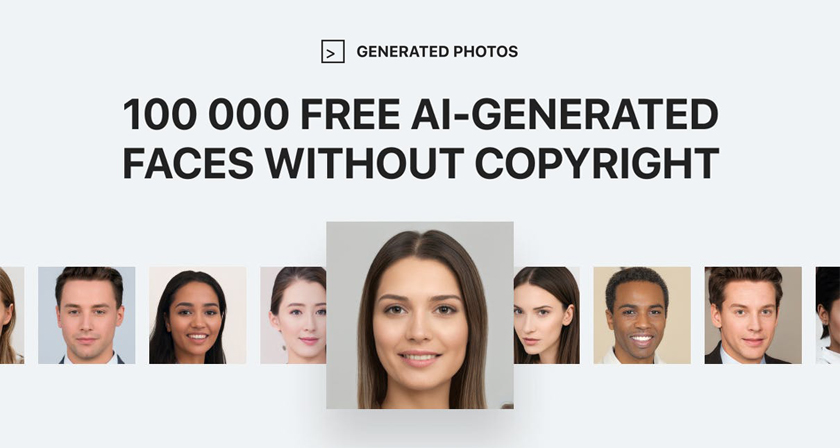
Just when we thought artificial intelligence had reached the limits of its capabilities, it introduces us to another groundbreaking application—producing astonishingly realistic photos of humans. Unlike traditional photography, which relies on capturing real-world scenes, AI photos are synthesized entirely by machine learning algorithms. They hold a mirror to human features, capturing intricate details, without ever needing a human subject to model for them.
What Are AI-Generated Photos of Humans?
AI-generated photos of humans are not mere pixelated imitations; they are highly sophisticated, digitally crafted images that not only simulate the human face but can also replicate the myriad expressions and complexities of human emotion. These are not photos taken by a photographer but are essentially designed by algorithms and machine learning models.
Creation Process
Creating these photos isn’t as straightforward as clicking a button. It’s a highly complicated process that starts with a deep learning model being trained on an extensive dataset comprising high-quality, original human photos. These models, called Generative Adversarial Networks (GANs), then begin the task of creating their unique, human-like images, which can mimic everything from different skin tones to a range of facial expressions.
Features of AI Human Photo Generators
● Quality of Image: We’re talking about images that are so crisp and clear that they can rival even the best photographs taken by professional cameras. The high-definition output is remarkable and often indistinguishable from actual human portraits.
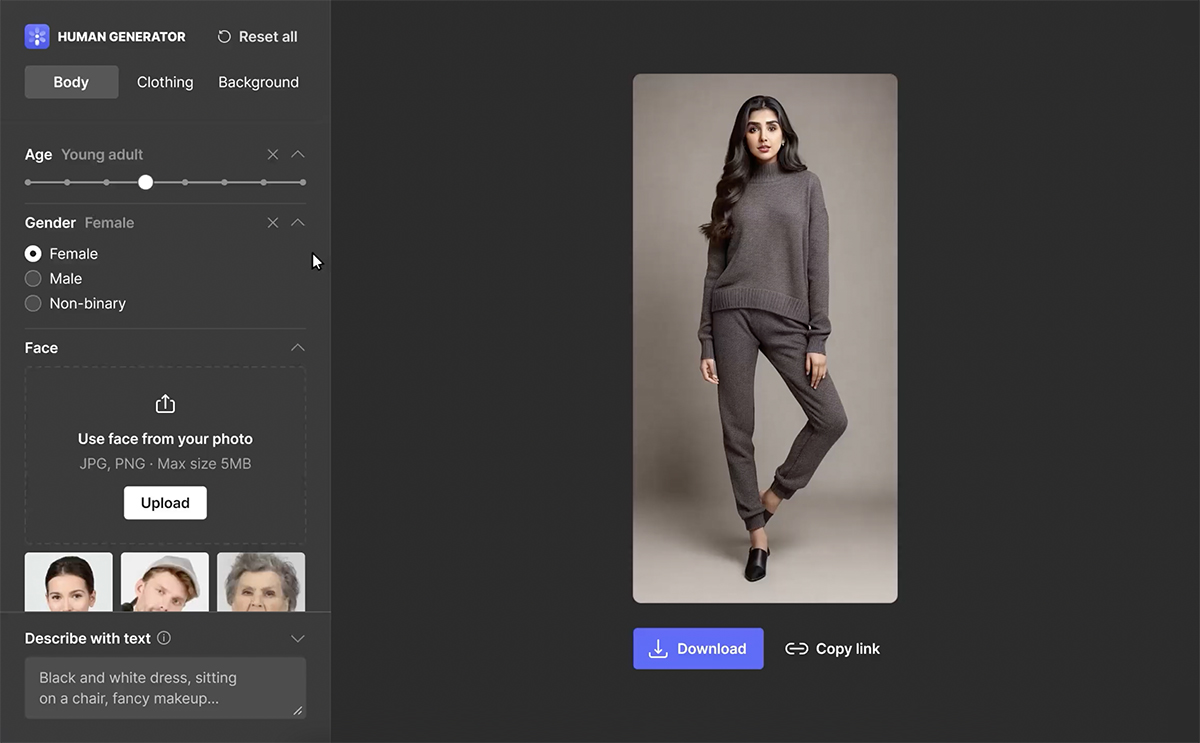
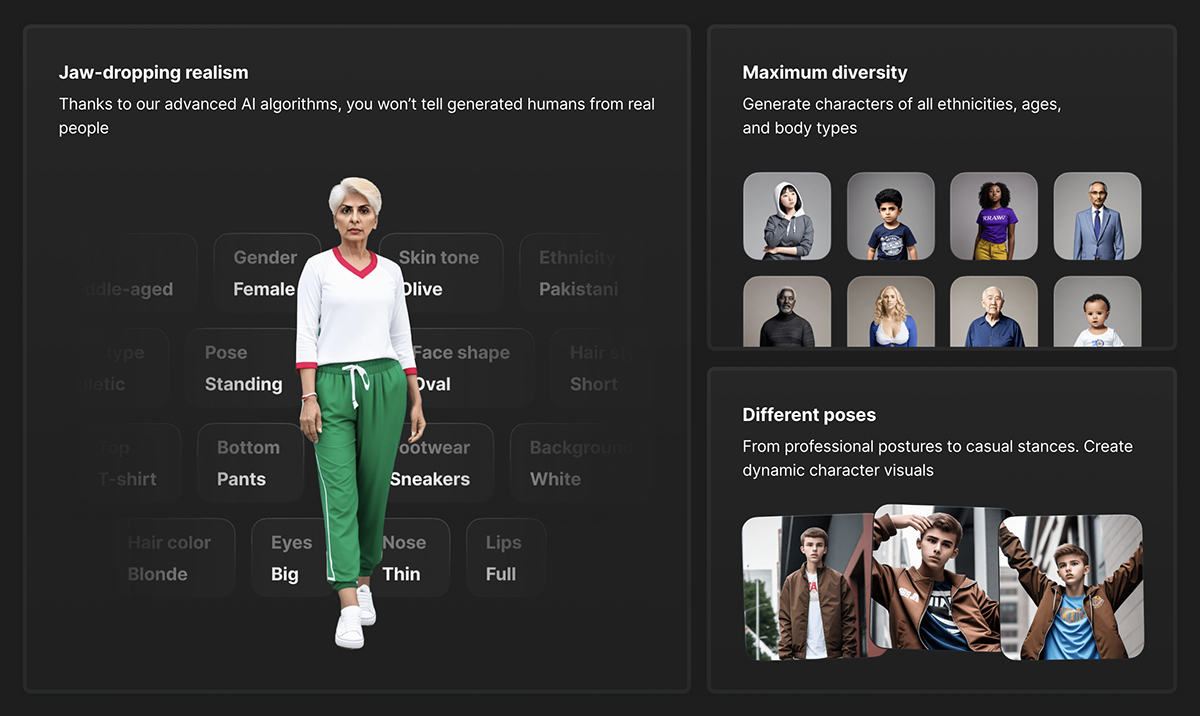
● Customization Options: Imagine having the ability to alter facial features, hair style, clothing, pose and even the background in a matter of seconds. The depth of customization offered is quite unparalleled. These features are going beyond simple button pushing of pre-made commands with prompts, so you can create the one that will meet your requirements!
● Speed and Efficiency: Remember the hours spent in a photo studio? Well, these AI generators can produce multiple images in mere seconds, allowing for a level of efficiency that was once unthinkable.
Types of AI-Generated Human Photos
(i) Stock Photos
Stock photos have their limitations—limited diversity, overused images, and sometimes hefty licensing fees. AI person generator offer a refreshing change. Not only do they present a wide range of diverse and inclusive images, but they are also often free to use or come with minimal licensing restrictions.
Virtual avatars are not new, but the level of realism that AI-generated photos bring is unprecedented. These aren’t just static, cartoonish figures; they can interact with different virtual environments, express various emotions, and offer an overall more immersive user experience. Many creators now rely on an AI video generator to build avatars that feel more human and expressive. To enhance realism even further, technologies like AI text-to-speech (TTS) are increasingly used to give virtual humans natural-sounding voices that match their visual presence.
(iii) Artistic Interpretations
In the world of art and graphic design, AI-generated person’s photos are opening up new frontiers. Artists and designers can create a range of human images that were previously only imaginable, from reimagining historical figures in modern settings to creating entirely fictional characters for stories and games.
How Are They Different from Traditional Photos?
(i) Authenticity
While AI-generated photos of people offer incredible realism, they do lack the authenticity that comes from capturing a moment spontaneously. The human touch, the raw emotion, and the inherent flaws that make a photograph so relatable are missing.
As AI-generated images become increasingly realistic, distinguishing synthetic visuals from authentic photographs can be challenging. AI image detectors can help identify images that may have been generated or manipulated using artificial intelligence, which can be particularly useful when verifying the origin of visual content.
(ii) Variety
Traditional photography can be limiting due to the availability of models, locations, and other logistical factors. In contrast, AI-generated images offer an endless array of options. Whether you need a specific type of facial expression or a particular background setting, AI-generated photos can meet these requirements with ease.
(iii) Cost-Efficiency
Renting a photo studio, hiring a professional photographer, and possibly models could break the bank. AI-generated photos slash these costs dramatically. You can generate a plethora of high-quality images from the comfort of your home, saving both time and money.
Applications and Uses
(i) Advertising and Marketing
Marketers are always in search of the perfect image to resonate with their target audience. AI people generator offer a solution. They can be tailored to suit specific demographics, age groups, or even personality types. This level of granularity in customization makes them an invaluable asset in today’s highly segmented marketing landscape.
(ii) Data Privacy
In an age where data breaches and privacy concerns are rampant, using AI-generated photos in data sets offers a level of anonymity that wasn’t previously possible. Since these are not real individuals, the ethical dilemma surrounding the use of personal images in data sets is significantly minimized.
(iii) Scientific Research
In fields like psychology, sociology, or even medicine, the controlled conditions of AI-generated photos are proving to be invaluable. Researchers can study human reactions to different facial expressions or appearances without the ethical implications that come with using real human subjects.
Conclusion
Generated pictures of humans are far more than just a technological novelty. They are a pivotal innovation that holds immense potential across various industries, from advertising to scientific research. While they come with their set of ethical and philosophical debates, the impact they are having is undeniable. They are not merely reshaping the way we view imagery but are also redefining our understanding of what is real and what is simulated.