The Evolution Of Digital Advertising (Infographic)
Digital advertising has changed dramatically over the last few decades. What began as simple banner ads and static web pages in the early days of the internet has evolved into a complex, multi-layered ecosystem — one that uses social media, mobile apps, video, AI, and data to reach people in smarter and more meaningful ways. Every leap in technology, from broadband to smartphones, has reshaped how brands tell their stories and connect with audiences online.
Looking back at this journey isn’t just interesting — it’s essential for anyone working in marketing, design, or business today. Understanding how online advertising grew and adapted helps us make sense of where it’s headed next. It shows how new platforms, changing user habits, and fresh creative ideas have all played a part in shaping the digital landscape we now take for granted.
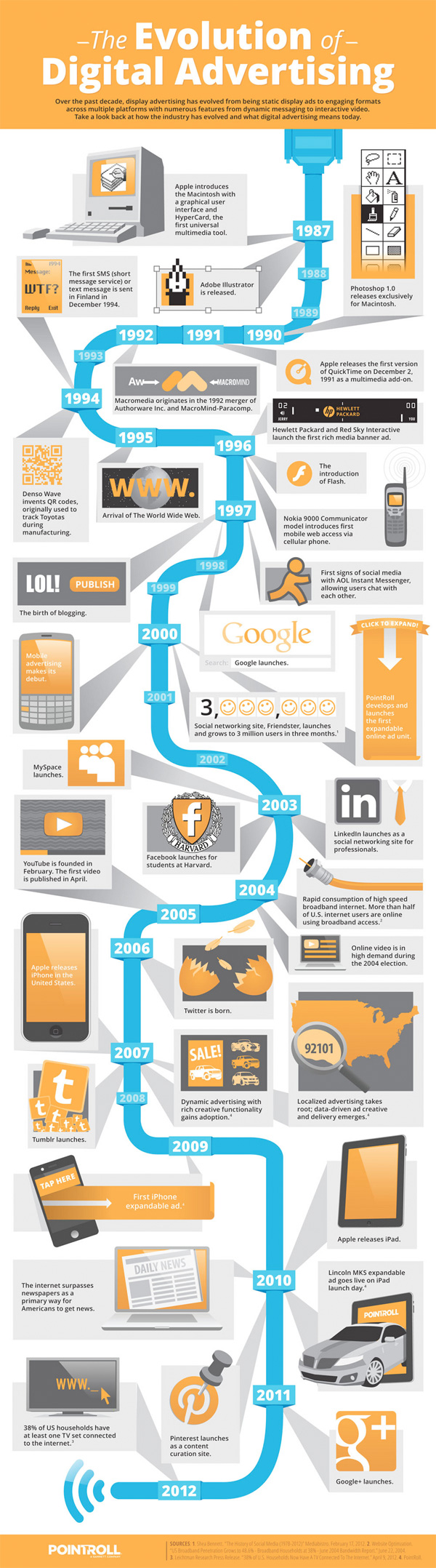
The infographic below, created by Pointroll.com, charts this evolution step by step. It highlights the biggest moments, the platforms that changed everything, and the trends that continue to shape how we experience advertising in the digital world.
Digital advertising never stands still. With technologies like artificial intelligence, augmented reality, and immersive experiences becoming mainstream, the next wave of change is already here. What worked five years ago might not work tomorrow — and that’s exactly why understanding the past is so valuable.
By knowing how far the industry has come and why it changed, marketers and creators can make smarter choices, spot opportunities faster, and build campaigns that truly connect. The story of digital advertising is still being written — and the best chapters are yet to come.