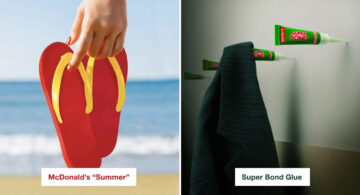
35 Ads With Headlines and Copywriting So Good, You’ll Wish You Wrote Them
Long before anyone tracked scroll depth or click-through rates, the best copywriters on Madison Avenue had worked out something that still holds: most people will only ever read your headline. Get it right and you earn a few more seconds of attention. Get it wrong and the rest of the ad, however beautiful, might as well be blank.
Ogilvy put a price on it back in 1963. In Confessions of an Advertising Man, David Ogilvy argued that five times as many people read the headline as the body copy, so writing the headline was where most of the advertising budget actually got spent. Modern research tells a similar story about attention. Online, people read roughly a fifth of the words on an average page, and outdoor advertisers still work to an unofficial seven-word limit.
The best headlines leave a gap on purpose. They rarely say everything. Instead, they plant a double meaning, twist a familiar phrase, or set up a joke and let you deliver the punchline yourself. That half-second of working it out helps make a line stick. A conclusion you reach yourself is more satisfying than one handed to you. Add a specific detail or a little honesty about the product’s flaws, and a short line can carry more persuasion than a full page of body copy.
Short copy is rarely quick to write. Behind most lines that read effortlessly sit dozens of rejected drafts, which is why the ads below reward a slower look. Some are decades-old print classics, others come from recent outdoor and public service campaigns, and together they show ad copywriting at its most economical. Read them the way a copywriter would: notice the punchline, then notice what was cut to make room for it.
The formats change, but the job hasn’t. Print spreads gave way to billboards, then to building wraps and the few words that fit in a phone notification, yet the brief remains the same: say one true thing, in fewer words than seems possible, and trust the reader to meet you halfway. As attention keeps getting scarcer, a well-written line is worth more today than it was in Ogilvy’s time.
Share this article with a writer friend and tell us your favourite campaign in the comments.