How To Convert Text Into Speech For Social Media Storytelling
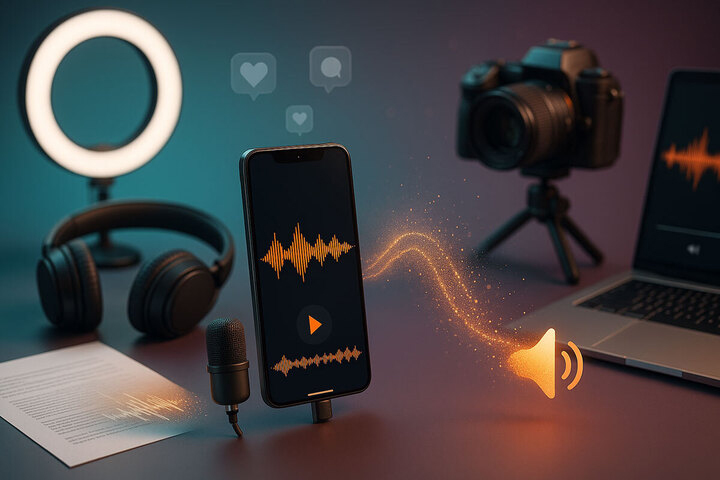
Social feeds move fast, yet stories still win attention when they sound like a human sharing something worth hearing. A clear ribbon of narration can slow the scroll, keep viewers oriented, and carry meaning even when on-screen text is brief.
Voice also helps people who prefer listening, supports those watching hands-free, and gives teams a consistent tone across a series. Most importantly, it lets visuals breathe; the narrator handles the details while the frame focuses on action, expression, or motion.
This is not just a production trick; it is a storytelling choice. When narration is treated as a character in the scene, short videos gain warmth and direction. A calm guide can turn how-tos into small wins. A playful host can make product demos feel like skits. Even a neutral read can steady the pace of a fast montage.
What once required a studio session now fits inside a routine: write for the ear, generate a first pass, refine rhythm against the cut, and publish with confidence. As teams get comfortable, they experiment with pacing, try alternate timbres, and prepare multilingual versions without rebuilding the whole edit.
To make that repeatable, many teams route their scripts through a lightweight text into speech step, treating narration as a reproducible asset rather than a one-off recording. With a dependable conversion stage in the pipeline, the same story can be voiced, revised, and localized with less friction and far more consistency.
Plan the Story for the Ear
Good narration begins before any microphone is involved, and planning from a listener’s point of view keeps meaning clear in short runtimes.
Each beat benefits from carrying a single idea, because the voice can land it cleanly while the visuals show evidence.
Writing that sounds like speech, using contractions, everyday verbs, and short lines, allows the narrator to speak naturally and helps viewers follow along.
Hooks belong early, since attention is won or lost in the first seconds, and an upfront promise anchors the rest of the story.
A short pause before a punchline or reveal gives humor or insight room to land without feeling rushed.
The frame should always show what the line references, so the audience never has to guess what is being described.
A Practical Workflow: Script to Finished Audio
Draft the lines for meaning first, keeping the total word count aligned with the intended runtime so the story never outruns the edit.
Mark intent directly in the script by adding small cues in parentheses, such as “calm, quick” or “smile on ‘finally’” and, when supported, use markup for pauses and emphasis to guide delivery.
Generate an initial pass and place it under the footage, using this rough read to test clarity and timing in context rather than to judge polish.
Edit the rhythm with the cut in mind by trimming silences that drag on mobile and inserting a breath before punchlines or important numbers to improve impact.
Normalize loudness so the voice sits slightly above music and sound effects, then apply gentle de-essing to tame harsh “s” sounds while avoiding heavy compression that would make the read brittle.
Name and version files are predictable; keep filenames stable when intent has not changed, so timelines update cleanly.
Export platform-ready deliverables while retaining a 48 kHz, 16-bit WAV master for archiving and future revisions.
With a repeatable loop in place, the next consideration is how the same narrator adapts across platforms without losing character.
Platform-aware Narration that Still Feels Like One Voice
TikTok & Instagram Reels
Short beats and strong hooks perform well, so effective reels often introduce narration before the first cut and rely on concise sentences that preserve clarity at speed. Captions assist viewers who watch muted, and light platform edits correct names and jargon.
YouTube Shorts
There is slightly more room to explain, which makes instructional language useful; a clear sequence, “First,” “Now,” “Here’s the why,” guides how-tos. Mixing the voice a little above the background tracks helps intelligibility on phone speakers.
Instagram Stories
Because Stories are episodic, a consistent narrator tone ties frames into a single arc, and a brief breath at transitions lets late viewers rejoin without losing meaning.
LinkedIn & Educational feeds
Clarity takes priority over character, so a steady pace and concise summaries work best, with captions doing extra work for muted viewing common in offices.
These platform choices work best when the mix quietly supports the voice.
Accessibility and Clear Boundaries
Every post should include accurate captions so people who are Deaf or hard of hearing can follow along and so anyone in a noisy or silent environment can keep up without sound.
Longer pieces should provide transcripts through a pinned comment or link, which improves inclusion and also helps searchability.
Any voice that is based on a real person should be used with explicit permission that defines usage and credit, and imitations of living people without approval should be avoided entirely.
Language choices should invite rather than exclude, steering clear of stereotypes that would undercut the message or the audience’s trust.
Delivery should match the sensitivity of the topic, so tone never clashes with subject matter.
Once the experience works for everyone, the same read can be repurposed across formats and regions with much less friction.
Even solid routines hit friction, so a few common fixes help when problems appear at the last minute.
Troubleshooting Common Snags
When the narration sounds robotic, specificity restores humanity: lines that include clear direction, mixed sentence lengths, and micro-pauses around key phrases allow the performance to breathe, and a warmer timbre can add welcome color.
When timing feels off, small changes, trimming or extending the read by only a few percent, and checking the result with tap tempo, often bring the rhythm into a comfortable groove.
When harshness shows up on earbuds, shaving a few decibels around the 6–9 kHz range and then re-checking the result on laptop speakers and a TV typically solves the problem.
When captions cover important action, the fix is either visual or temporal: critical elements can move higher in the frame, or narration can land on beat changes when captions are least intrusive.
When humor does not land, a short pause before the turn usually gives the punchline room to breathe and makes the beat feel intentional.
When mixes vary post to post, saving EQ and limiter presets ensures the narrator feels like the same person across the channel.
Conclusion
Social storytelling rewards clarity, warmth, and pace. A steady narrator can carry all three, guiding attention, simplifying complex ideas, and letting visuals shine. Converting text into voice has become a practical craft step any content team can own.
With a simple workflow, thoughtful casting, careful mixing, and a few platform-aware habits, creators present narration that sounds human, fits each channel, and invites viewers to lean in, even when the feed never stops moving.