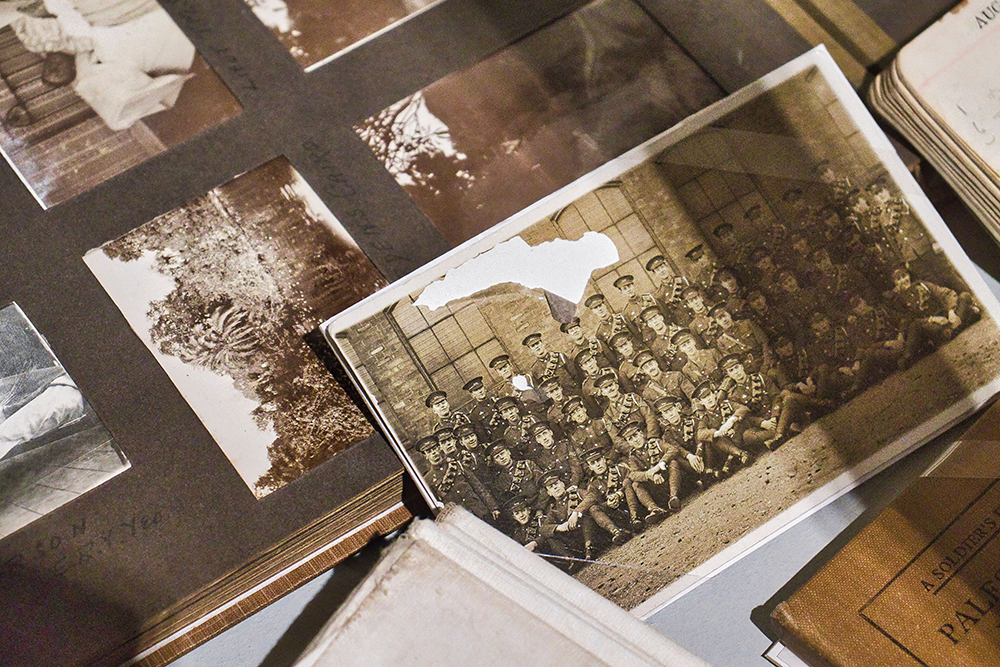
A photograph torn in half, water-stained beyond recognition, or faded to near nothing can still carry more weight than its condition suggests. The impulse to restore a damaged photograph is almost universal — these are irreplaceable records of people, places, and moments that no longer exist. Whether the damage is physical, chemical, or the result of decades of neglect, the question is rarely whether restoration is possible. It’s how much of the original story can be recovered, and at what point the gaps become part of the story too.
What Kinds of Damage Can Actually Be Repaired?
Most common types of photograph damage are repairable to some degree. Though the quality of the outcome depends heavily on the severity of the damage and the quality of the original image.
- Physical damage — tears, creases, missing corners, surface scratches — responds well to digital restoration. A skilled restorer working in software like Adobe Photoshop can rebuild torn edges by borrowing texture from surrounding areas, fill in missing sections using pattern-matching tools, and remove scratches without disturbing the underlying image. The results are often indistinguishable from the original at typical viewing distances.
- Chemical damage is trickier. Fading, yellowing, and color shift happen when the dyes and silver compounds in photographic paper break down over time. Digital work can correct these to varying degrees. But when fading has progressed far enough, the underlying detail is simply gone. No software can recover data that no longer exists in the image. The tools available for this kind of work have advanced significantly — apps that can fix blurry photos and convert low-res images to high-res have pushed what’s technically achievable in restoration forward, but the physical record still remains the ceiling.
- Water damage and mold present the most complex challenges. Staining can sometimes be reduced. However, if the paper substrate has been structurally compromised or the emulsion has separated, restoration becomes more interpretive than corrective.
How Do You Restore a Damaged Photograph?
The first step is digitization: creating a high-resolution scan of whatever physical original exists. This scan becomes the working file, and the original print is safe, ideally in archival storage.
For photographs that exist only as negatives, the digitization step is even more critical. Negatives often contain more tonal detail than the prints made from them, which makes them a valuable source material. Choosing to transfer negatives to digital before deterioration advances further can mean the difference between working from a rich original and trying to reconstruct from a compromised print.
Once digitized, restoration work happens entirely in software. Layers protect the original scan. Healing brushes, clone stamps, and frequency separation techniques address texture and tone separately, which allows for more precise repairs. For faces and fine details, careful manual work is almost always the solution — automated tools produce inconsistent results on the most important parts of an image.
When Should You Prioritize the Physical Original?
The physical original matters even after you successfully restore a damaged photograph. A scan is a copy, not a substitute for the object itself. If the photograph has historical, genealogical, or artistic significance, the condition of the physical print affects its value and authenticity in ways that a digital file cannot replicate.
Before beginning any restoration work, assess whether the original needs physical conservation as well. Gently clean the surface dirt. A conservator can humidify and flatten rolled or curled prints. However, be careful with photographs in acidic envelopes or albums; see if you can rehouse those in archival materials as soon as possible.
Treating photographs as the serious assets they are — worth protecting with the same care a designer brings to any irreplaceable file — means acting before damage becomes severe, not after. The range of AI tools available for creative work now includes preservation-adjacent capabilities, but no tool can substitute for physical care of the original.
What Role Does AI Play in Modern Photo Restoration?
AI-powered restoration tools have changed what’s achievable for non-specialists. Applications trained on millions of photographs can automatically reduce noise, sharpen faces, colorize black-and-white images, and fill in missing areas with plausible content. For lightly damaged photographs, the results are often excellent with minimal effort — as comparisons of the best AI image upscalers show, even heavily degraded source material can yield surprisingly usable results.
The limits of AI restoration are equally important to understand. AI fills gaps by predicting what was probably there based on statistical patterns — not by recovering actual data. A face reconstructed by AI in a torn photograph may look convincing, but it is not the original face. For personal use, this is often acceptable. For historical documentation, archival work, or legal purposes, AI-generated fills should be clearly identified as such.
What Gets Lost Even After a Good Restoration?
According to Library of Congress guidance on photographic preservation, the integrity of the original record, even if it has damage, must be maintained separately from any digital version. Restoration creates a new image; it does not transform the damaged original into something it no longer is.
A technically successful restoration can recover visual information without recovering meaning. The specific quality of a photograph — the paper, the slight warmth of an old process, the physical evidence of handling — carries information that no digital file can hold.
Water stains on a photograph may speak to a flood that destroyed a family home. A torn edge might mark where two estranged relatives were separated in a print. Creases follow the folds of a pocket where someone carried a picture for years. The Northeast Document Conservation Center’s guidance on photographic conservation recommends documenting damage and its probable causes before restoration, precisely because the damaged state is itself historical evidence.
Restoration, at its best, serves access. It makes images legible again, recoverable, shareable. What it cannot do is fully restore context — the texture of time, the weight of what the photograph has been through.
The Story the Damage Tells
Every attempt to restore a damaged photograph is also a decision about what to keep. A perfect digital restoration might produce a cleaner image while quietly erasing the marks of everything that happened to it. The best restorations hold both — a legible image and an honest record.
If you have damaged photographs waiting in a drawer or an album, start with a high-resolution scan before anything else. Preserve the physical original. Decide separately what kind of restoration serves the story you want to keep alive.