What Is SSL? Why Every Website Needs SSL Encryption for Security, Trust, and SEO
SSL (Secure Sockets Layer) is a core web security technology that encrypts the connection between a website and its visitors. This encryption ensures that sensitive data — such as login credentials, payment details, and personal information — cannot be intercepted, altered, or misused by hackers.
In simple terms, SSL converts readable data into secure code that only the intended recipient can understand.
Websites protected with SSL display HTTPS in the address bar along with a padlock icon, signaling to users that the connection is secure and trustworthy.
Today, SSL is not just about security — it directly impacts user trust, browser behavior, search rankings, advertising compatibility, and modern web functionality. Any website that wants to appear credible, professional, and future-ready must use SSL encryption.
Why Is SSL Important?
1. Protects Sensitive User Data
SSL keeps confidential information encrypted so that only the intended server can read it. Without SSL, data can be viewed or stolen by anyone intercepting the connection.
2. Builds Trust and Credibility
SSL verifies a website’s identity and assures visitors that they are interacting with a legitimate, secure site — increasing confidence and engagement.
3. Improves Search Engine Visibility
Search engines treat HTTPS as a positive ranking factor. Secure websites gain a competitive advantage in organic search results.
4. Prevents Browser Security Warnings
Modern browsers label non-HTTPS pages as “Not Secure,” which discourages users from continuing on the site.
5. Required for Advertising Platforms
Many advertising networks and ad platforms prefer or require HTTPS-enabled websites to serve compliant ads properly.
6. Essential for Apps and Modern Web Features
Mobile apps, APIs, and browser features increasingly require HTTPS connections for security and functionality. Understanding these requirements is also important for developers building and maintaining cloud applications, where secure communication between services plays a critical role in application development.
The Web Is Moving Toward Encryption Everywhere
Major browsers, operating systems, search engines, and technology companies continue to push the web toward a fully encrypted environment. HTTPS is no longer optional — it is the foundation of a secure, trustworthy internet.
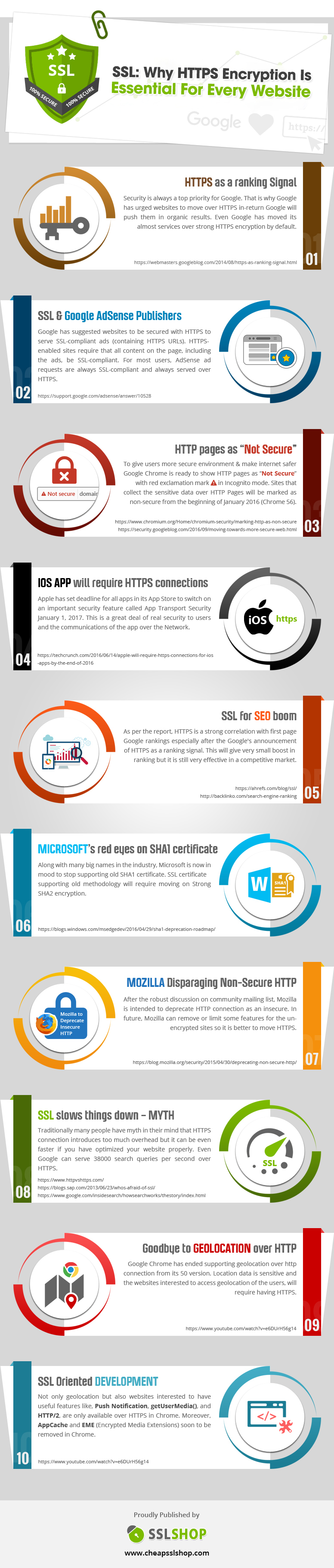
Know more in this handy infographic by SSL Shop below.
SSL is no longer a technical upgrade reserved for large websites. It is a fundamental requirement for security, trust, and long-term online growth. From protecting user data to improving search visibility and browser compatibility, HTTPS encryption plays a vital role in how modern websites are built, ranked, and trusted.
If your website is still running on HTTP, now is the time to switch to SSL and secure your visitors, your brand, and your future on the web. If you found this guide helpful, share it with someone who may need it, and let us know your thoughts in the comments below.