There is something about West Coast design that only makes sense in person. The way a walnut table absorbs sunlight. How fabric changes color as the sky shifts from haze to gold. Screens can show shape and color, but they cannot show weight, texture, or presence. Digital images are useful, but they are incomplete.
If you are searching for high-quality luxury furniture in Los Angeles, showrooms such as Melaaura demonstrate why experiencing materials and craftsmanship in person still matters. A room is not understood by looking at it; it is understood by moving through it. Standing next to a sofa reveals its real scale. Touching a textile shows its density and softness. These details shape how a space actually feels, and no online gallery can fully replicate them.
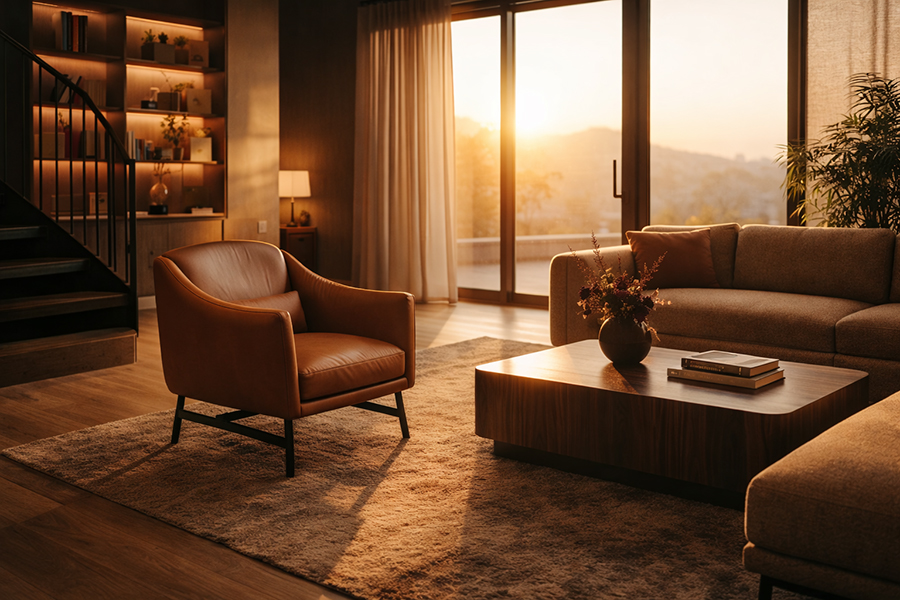
Walk through the design districts of West Hollywood and you can sense why physical spaces still matter. Showrooms are not just places to buy furniture. They are places to learn how materials behave, how proportions work, and how objects interact with light and space. There is a kind of spatial understanding that only comes from being physically present.
The Showroom as a Design Laboratory
In Los Angeles, showrooms operate more like design studios than retail floors. Designers use them to test ideas, refine proportions, and explore how pieces perform in real environments. This culture existed long before social media compressed design into trends and templates.
Some showrooms are dramatic and expressive. Others are quiet and restrained. Both approaches communicate something about how a room should feel. The spacing between objects, the way light moves across surfaces, and the balance between openness and density all shape perception. A sofa is not just furniture; it defines rhythm and scale inside a room.
The Architecture of the Object
Certain pieces naturally anchor a space. A well-proportioned chaise placed under natural light can organize an entire room without demanding attention. In Los Angeles, where open floor plans and indoor-outdoor living dominate, furniture must function as part of the architecture, not merely decoration.
Seeing pieces in person reveals how finishes respond to sunlight, how materials age, and how size feels within real rooms. High-end furniture here is expected to work with light, volume, and movement. The density of quality showrooms reflects a city that takes spatial experience seriously.
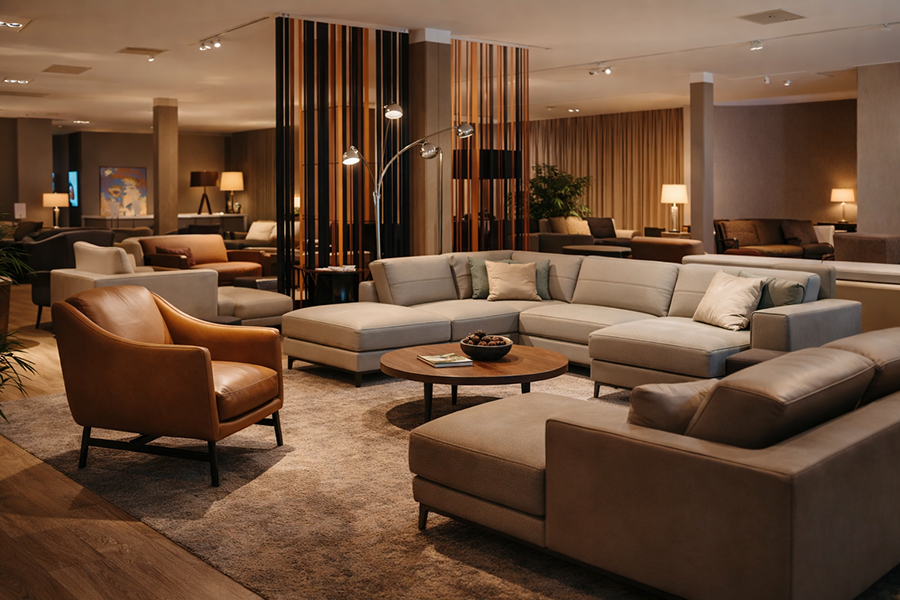
Material Truth and Real Quality
Touch changes perception. Sitting, leaning, opening drawers, feeling seams, these actions reveal quality quickly. In a climate where spaces open to terraces and gardens, furniture must remain stable, balanced, and visually composed under strong light and temperature shifts.
Construction matters. Joints, stitching, weight distribution, and material thickness cannot be judged accurately online. When filters and lighting tricks disappear, real craftsmanship becomes obvious. True luxury is not decoration. It is precision, durability, and restraint.
Why Physical Still Wins
Furniture only becomes complete when it interacts with the human body and the room around it. Photos can flatter. They cannot convince. Scale, comfort, texture, and proportion must be experienced directly.
Even with advanced digital tools and virtual walkthroughs, meaningful design decisions still start with walking into a space and engaging with the objects themselves. Presence clarifies quality. In the world of luxury furniture in Los Angeles, physical experience remains irreplaceable.