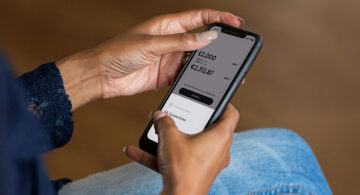
Why UI/UX Matters When Managing Your First Creative Budget
There is a moment in every creative person’s life when independence suddenly becomes a reality. Perhaps it’s when you receive your first freelance payment. Or when you get a junior design job and realize that your monthly salary is no longer a dream, but a hard fact.
For creative students and young professionals, this could be the first time they face a challenge that somehow feels too familiar: designing a system that works. Budgeting, in a certain sense, is a design challenge. Just as a website or a mobile app has a structure, a design, and a user interface, so does a personal financial system.
Just as a bad interface can ruin a website or an app, a bad interface can ruin a financial system. And just as more and more financial tools are now designed with a user interface that works, so can a creative person’s financial life.
Your Financial Dashboard Is a User Interface
Do you remember the first time you used a modern banking app?
The good ones don’t have a lot of spreadsheets or tables filled with numbers. Instead, they have a visual representation of your money. Your balance is front and center. Your spending categories are below it. Notifications are used to draw your attention to things that matter.
All of this is interface design.
Modern digital banking tools apply design principles that creative people already understand.
Clear hierarchy of information
Progressive disclosure of information
Visual feedback for interactions
Simple and frictionless interaction
As a result, managing money is no longer a chore, but an experience with a well-designed interface. As a creative person, this is more important than people realize. When information is well-designed, it’s easier to make decisions.
The Psychology of Visibility
Money in motion was once out of sight, out of mind, emerging only when the monthly statement arrived in the mail. In the old world of budgeting, you’d work hard all week long, oblivious to the impact, until the pain showed up in the statement after the fact.
And then came modern financial tools that disrupted the old paradigm of lagged feedback. Now, every time you spend, it’s immediate feedback time: a notification after the purchase, a shifting bar graph, a weekly summary that asks: “Is that really what you wanted?”
In user experience design, that’s called behavioral design—bridging the gap between what you do and what you know about it.
For the new income earner, especially in unpredictable, artistic fields such as freelancing, design, content creation, it’s not just helpful but necessary to see the system respond to your spending decisions.
Budgeting the Designer Way
Designers do not mesh well in a world of spreadsheets that demand control, structure, and discipline. The more spreadsheets try to impose order, the less likely it is to work because it removes flexibility, context, and other factors that designers appreciate in a system.
But when the financial tool is designed as an interface, the budgeting process starts to resemble the design process itself.
You notice patterns
You try out different tweaks
You continually iterate the design
For example, suppose you notice that subscriptions are sneaking into your spending patterns. A well-designed budgeting interface will immediately reveal that to you. And then it’s easy to decide what to keep and what to cancel—those that really deliver value, those that do not.
This is similar to the design thinking process that designers call “Observe, Analyze, Iterate.”
Benchmarks as a Reference in Design
We don’t design in a vacuum. We always look for references. When designing a user interface, we look at patterns on how other interfaces solve similar problems, conventions that we should follow, and interfaces that look “natural” or “intuitive” to us.
In financial planning, we should look at patterns too.
By understanding how people normally save, we can design a better financial planning interface. For example, looking at the average savings account balance by age can reveal how savings habits tend to evolve. In the United States, households under 35 have around $20,540 in savings on average, while those between 35 and 44 average roughly $41,540.
These are just references, and we should not totally base our design on these averages. If we don’t, we might misinterpret how well we are doing, just like how we might misinterpret a layout if we don’t look at how other interfaces are normally arranged.
When Financial Tools Become Creative Tools
One of the biggest changes in digital financial planning is that it is now becoming more similar to other digital productivity tools.
Some of the changes you might notice are:
Visual spending timelines
Goal-tracking interfaces
Automated categorization systems
Predictive analysis
It now feels more like a project management or design tool. This is a great thing for creatives, because we always have irregular incomes, we are always freelancing, and we always need a lot of design and productivity tools. This is no longer just a financial planning tool, but rather just another digital tool that we should always look at. It’s just another dashboard that we should always look at, aside from our design and productivity tools.
The Clarity Advantage
Financial independence is not only about the money you earn; it’s about the sense you make of it.
Clarity of thought reduces stress levels
Accuracy of numbers reduces mistakes
A framework reduces the unknown
If your financial perspective offers clarity on income, spending, and saving, you will enjoy the same sense of calm control as you would if you finally figured out how a confusing layout worked. And that sense of calm is potent. It allows you to focus on putting more of your energy into your creative endeavors, rather than worrying about invisible numbers working behind the scenes.
Building Your Own System
No two designers approach a design problem the same way. Likewise, no two financial systems should be the same. Some people may want a minimalist design with only a few key metrics, while others may want detailed information within their financial system.
The key is usability.
You should be asking the same questions you would while designing a product:
Is it easy to use?
Does it provide feedback?
Can I easily identify what is most important?
Does it reduce friction?
If you can answer those questions with a resounding “yes,” then you’re not only working with money; you’re building a system that supports your entire life.
Independence is a UX experience.
At its core, independence comes with its own interface—an ecosystem of tools, dashboards, and systems that enable you to make decisions with clarity. To today’s creative professionals, financial independence is not hidden behind rigid spreadsheets or messy bank statements. It’s presented within a thoughtfully designed digital experience.
As with any well-designed experience, the best systems don’t clutter or confuse. Instead, they shine a light on what to do next. When this experience is successful, working with your first creative budget doesn’t feel like a chore, but a familiarity, a well-designed experience.
Conclusion
Being creatively independent isn’t just about having talent, luck, or landing that first paid gig. It’s also about creating the backstage machinery that allows your creative flow to continue. Money management tools are part of that machinery.
Well-designed money management tools can greatly reduce the tension and anxiety associated with managing money by providing a better interface with money itself. Instead of being a stressful experience, money management can become a comfortable and recognizable creative process.
By recognizing patterns and continually improving decisions, money management can become a more intuitive experience. As a creative and young person trying to earn money for the first time, it’s a great experience. By being able to better understand what’s happening with money, it can become a more intuitive experience.
Being financially independent isn’t just about having money in a bank account. It’s about having clarity. As with any well-designed interface, having a great financial independence system isn’t about needing constant attention. It’s about having the obvious choice.